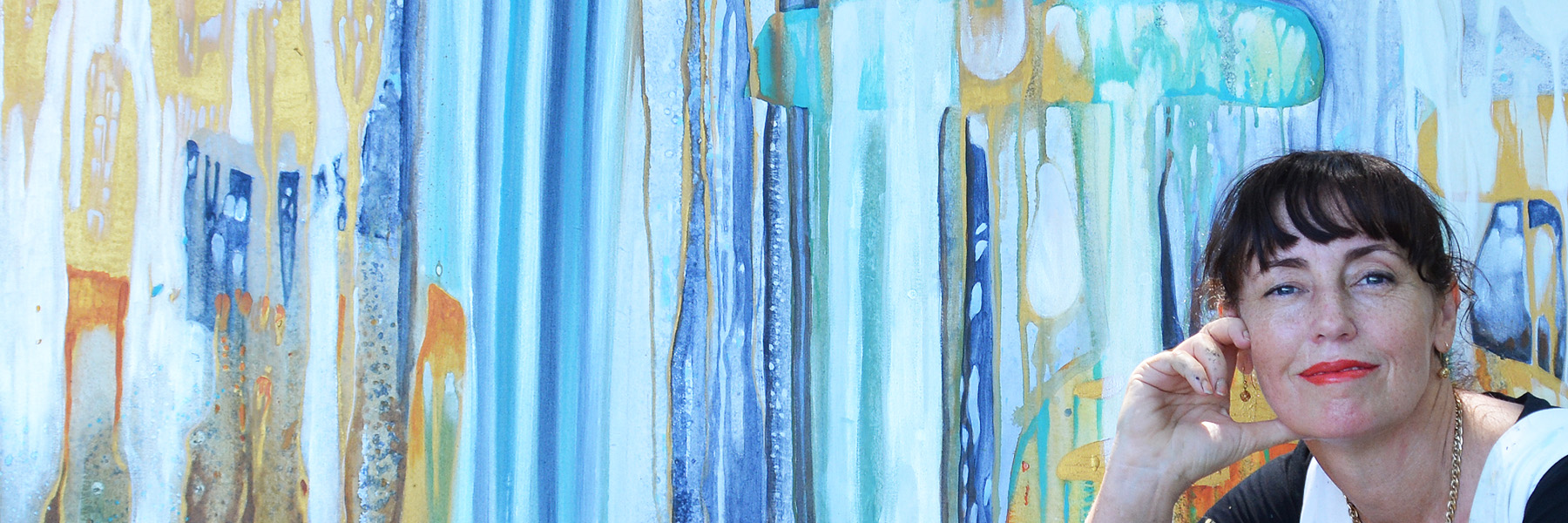
Sharron on ‘Innovation’
My work has never been driven by the question, “How do I decorate a space?” It has been driven by a deeper question: what does art do? That question has guided me from advertising and design into a broader creative and intellectual practice focused on psychology of the built environment through artful finishes for health, aged care and human well-being. At the core of my beliefs is the realisation, years ago, that art is as practical as it is precious. Practical in that one core artwork can instantly update an outdated environment, thus creating low-waste design. Once art is a part of the environment it reduces the urge to renovate, due to aesthetics, and charachter value. Art can create sustainability. Just like the Art Nouveau and Art Deco movements became ‘Modern Built Heritage’ so can my art-based finishes. I describe this as a shift away from mass-produced visual culture and toward work that aims to imbued soul, atmosphere, relevance and heart into health- and aged care environments.
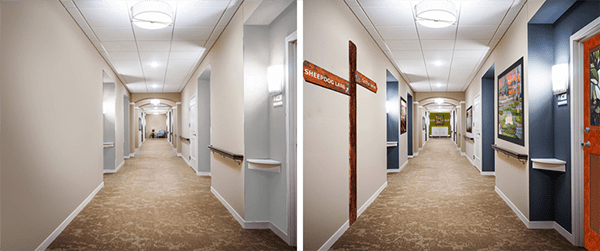
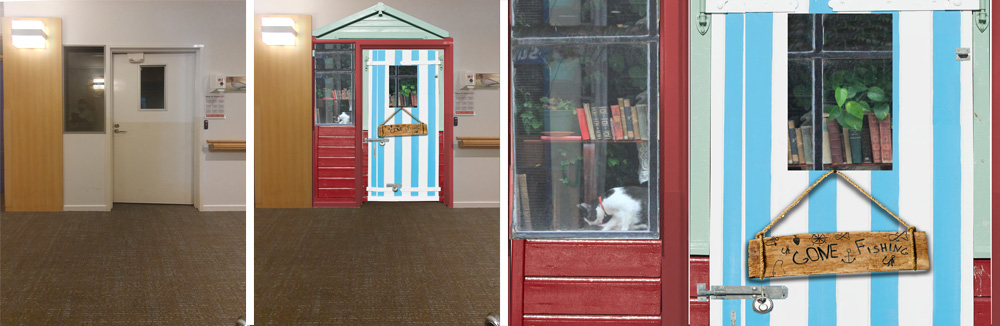
What makes this innovative is not simply the use of art in care settings. Art has long appeared in hospitals and aged care. The difference in my work is the proposition that artful visual design can operate as an environmental system, not an afterthought. Across projects and product development, I have explored how art can help personalise rooms, create non-verbal conversation cues, improve orientation, soften or camoflague clinical spaces, disguise stressful operational features and make buildings feel more legible and humane.
“Art creates culture, culture creates community, and community creates humanity.”
Susan Magsamen, Co-Author of ‘Your Brain on Art: How the Arts Transform us‘
That systems thinking can be seen in the range of concepts I have developed. Memory Boards were created as resident reminiscence and room-personalisation tools, designed to give staff visual conversation cues and support more person-centred care. Wayfinding landmarks were developed as part of a three-step approach to orientation, combining interior and exterior artworks and murals, with door differentiations and intuitive signage systems. Door disguises and nurses’ station disguises were conceived not just as aesthetic treatments, but as ways to reduce institutional stress, distraction and loss of privacy.
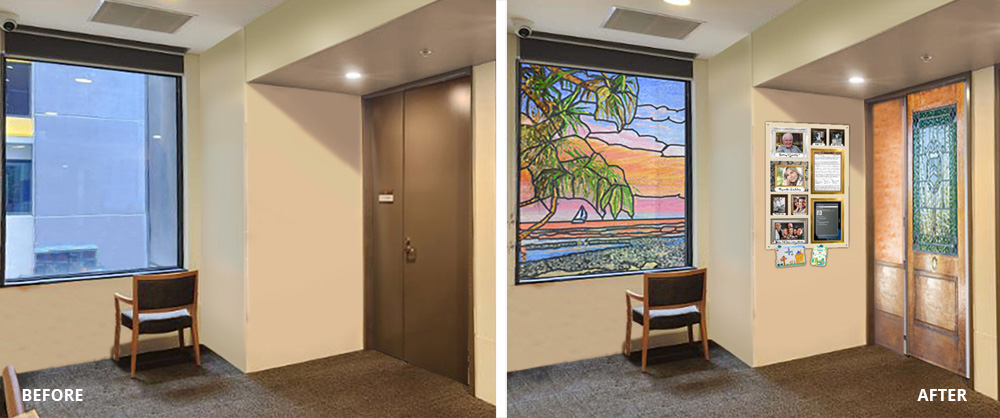
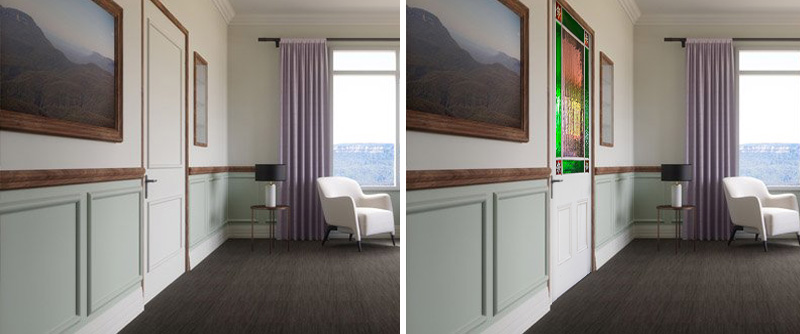
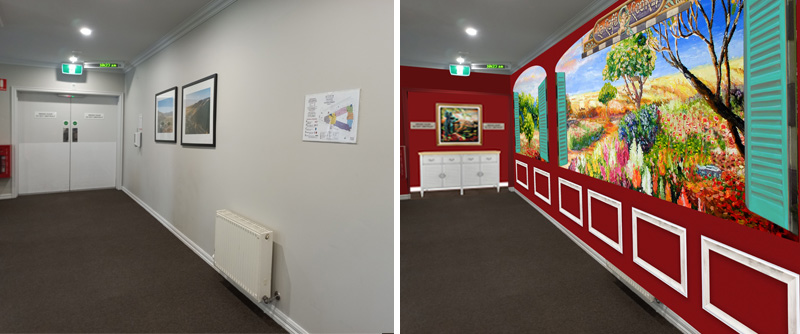
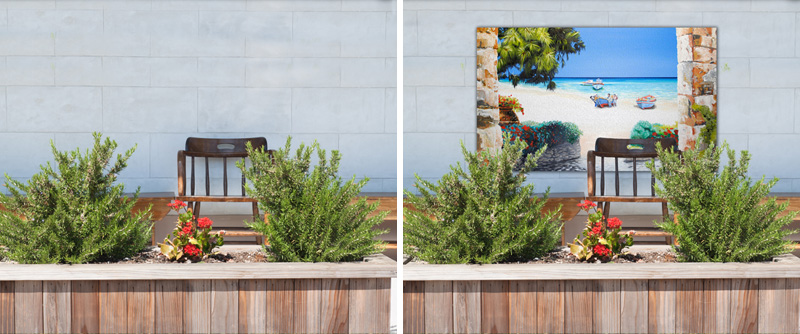
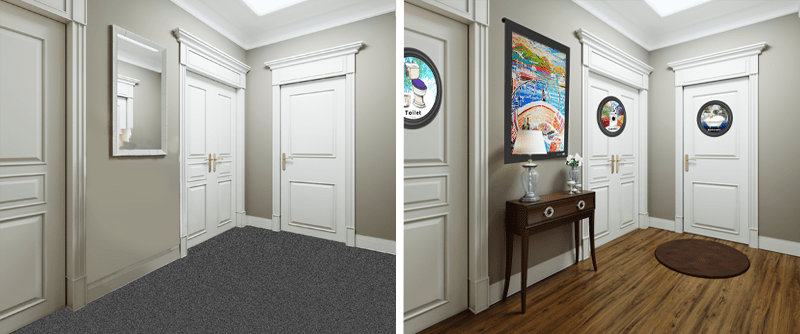
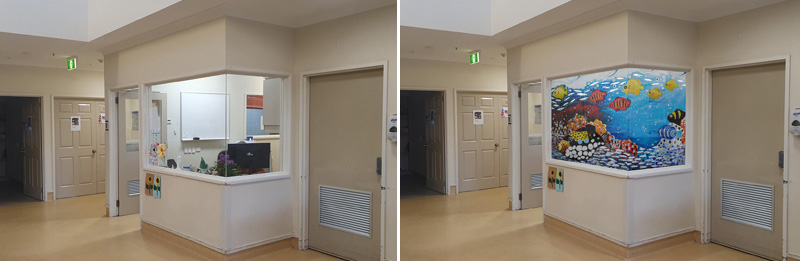
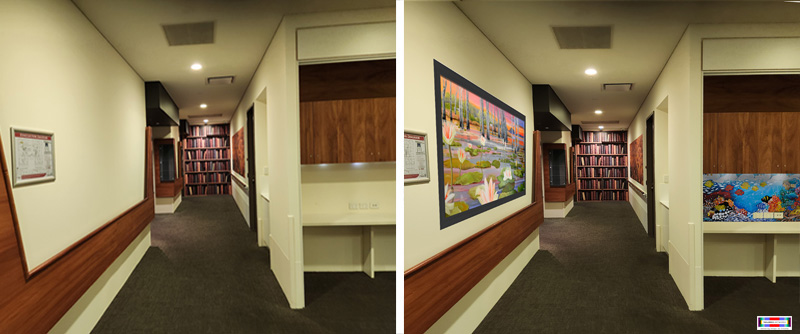
My innovation also extends into material and spatial design. On the healthcare side, I have developed murals and treatment-room concepts around the idea that beauty, nature, awe, imagination and visual calm can positively shape how a place feels. In parallel, products such as Tile Rugs– made from mosaic, explore how art can be embedded into floors and surfaces in ways that are durable, hygienic, non-slip, biophilic and aesthetically restorative.
Underlying all of this is a consistent theory: that art can do far more than decorate. It can create focal points, a sense of spaciousness, cultural connection, texture, relevance and emotional warmth; in care settings, that becomes a serious design question rather than a stylistic extra. This is why my current direction is increasingly academic as well as creative. I am interested in contributing to a broader body of knowledge about how visual environments influence dignity, attention, mood, orientation and lived experience across aged care and healthcare.
As such, my work is informed by neuroaesthetics: the growing science of how beauty, art and aesthetic experience affect the brain and body. Studies suggest that art can activate reward pathways linked with dopamine and other positive neurochemicals, while also engaging attention, emotion and self-referential networks. In health and aged-care settings, this helps explain why carefully designed visual environments may support calmer mood, greater engagement and more therapeutic everyday experiences.
“The greatest enterprise of the mind has always been and always will be the attempted linkage of the sciences and the humanities.” E. O. Wilson, Author of ‘Consilience‘
Sharron.Art reflects that next phase. It is a place for ideas, presentations, theory and public engagement as much as creative output. While my work remains grounded in practice, I am increasingly focused on how original practice-based thinking can add to conversations in dementia care, design innovation, neuroaesthetics and ethical health environments. The emphasis, at this stage of my life, is on scholarship, contribution and long-term intellectual value.